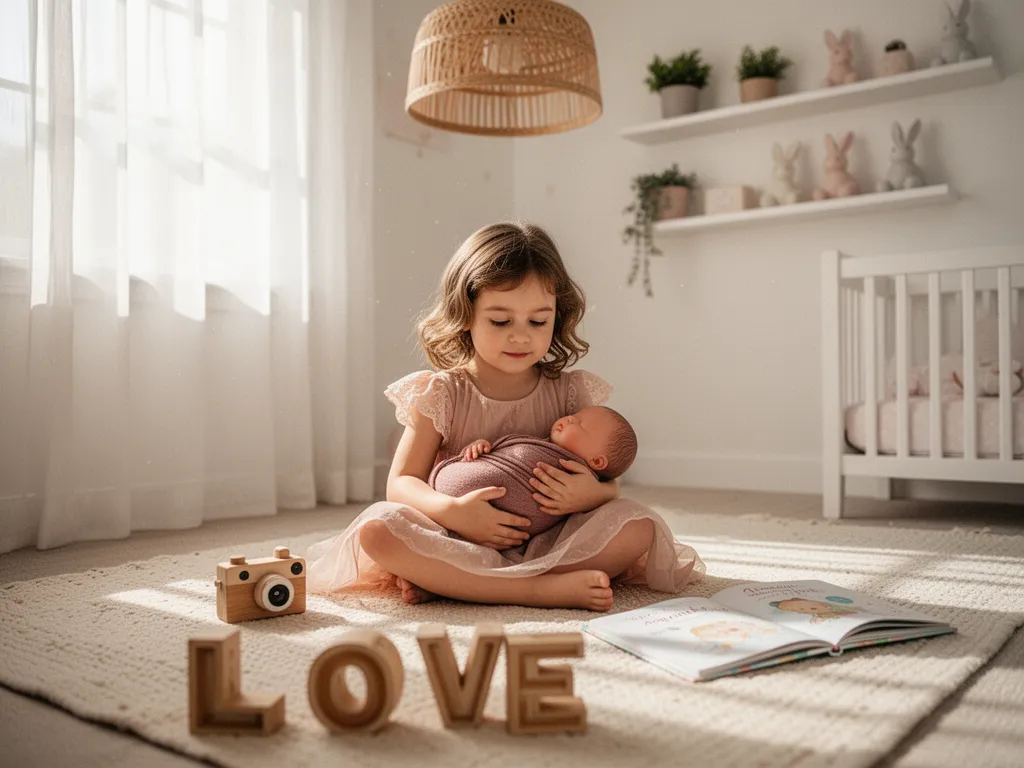
Best Big Sister Gifts to Welcome a New Baby & Celebrate Her New Role
Welcoming a second child transforms family dynamics deeply. The right big sister gifts validate her new identity, ease the emotional transition from only child to sibling, and create positive associations with her newborn brother or sister. From wearable pride to role-play tools, discover developmentally-appropriate presents that honor her growing role while keeping her feeling cherished.
The Best Big Sister Gifts to Welcome a New Baby
Welcoming a second child transforms family dynamics in beautiful—and challenging—ways. Your firstborn suddenly faces a monumental shift in identity, moving from "the baby" to "the big sister." This transition stirs complex emotions: excitement, confusion, jealousy, and pride often swirl together in ways toddlers struggle to articulate.
Thoughtful gifts celebrating this new role can help anchor your older child during this transition. The right present acknowledges her importance, honors her new responsibilities, and gives her tangible proof that she's still cherished.
Why "Big Sister" Gifts Matter
Before the baby arrives, your toddler has enjoyed undivided attention. Now she's sharing everything—your lap, your time, even her toys. Developmentally, toddlers lack the emotional vocabulary to process these changes, which often manifests as regression, clinginess, or acting out.
A dedicated gift from the new baby (delivered by you) accomplishes several developmental goals:
- Creates positive associations with the newborn before negative ones take root
- Validates her new identity at a time when everything feels uncertain
- Provides comfort objects she can control when so much feels beyond her control
- Opens conversations about what being a big sister actually means
Child development specialists emphasize that preparation and acknowledgment work better than surprise. Introduce the gift when discussing the baby's arrival, not as a bribe, but as recognition of her growing role.
Gifts That Celebrate Her New Title
Wearable Pride
Clothing announcing "Big Sister" status serves multiple purposes. It sparks positive attention from relatives and strangers ("Look at you, being such a helpful big sister!"), reinforces her special position, and creates photo opportunities that frame the transition joyfully.
Look for soft, breathable fabrics in colors she already loves. Avoid anything that feels like a costume—she'll wear this regularly, not just for announcement photos. Consider sizing up so she can grow into it, extending the validation through the early months when she's adjusting most intensely.
Matching sibling outfits work beautifully for photos, but ensure her individual "Big Sister" pieces stand alone. She needs recognition independent of the baby.
Story-Based Preparation
Picture books depicting big sister experiences help normalize her feelings while building excitement. The most effective titles show realistic challenges—mommy feeding the baby when the toddler wanted a story, the baby crying during the big sister's show—followed by loving resolutions.
Stories where the baby's gender remains neutral allow your daughter to project herself into the narrative regardless of whether she's gaining a brother or sister. Look for books that validate mixed emotions: it's okay to love the baby and miss having mommy all to herself.
Reading these together before birth creates shared vocabulary for discussing what's coming. After the baby arrives, the same stories provide comfort during difficult moments—"Remember when the big sister in our book felt sad? You felt sad too. What helped her feel better?"
Role-Play Tools
Toddlers process experience through play. A baby doll with realistic accessories (bottle, blanket, diaper) allows her to mirror your caregiving, transforming passive observation into active participation.
When you feed the baby, she feeds her doll. When you change diapers, she changes hers. This parallel play satisfies her need for attention while building empathy and practical understanding of baby care.
Choose dolls sized appropriately for her age—too large becomes frustrating, too small lacks presence. Durable, washable materials matter; this doll will experience intense "love" including being dragged everywhere and possibly thrown during emotional moments.
Keepsake Connections
Items that grow with both children create ongoing touchpoints for their relationship. Growth charts where you mark both children's heights over time, handprint kits capturing their sizes side-by-side, or photo frames specifically designed for sibling pictures become treasured artifacts of their shared history.
These gifts work best when introduced with ceremony: "This is where we'll mark how tall you both get. You'll always be the big sister, even when the baby grows bigger than you." The physical object anchors abstract concepts about time and relationship.
Practical Participation Tools
Toddlers crave genuine contribution, not pretend tasks. A small tote bag "for big sister supplies"—tissues, a small toy, snacks she can access independently—gives her real responsibilities during outings. She carries her bag while you carry the diaper bag, emphasizing her competence.
Similarly, a special cup or water bottle just for her eliminates competition over baby bottles or sippy cups. When the baby has bottles, she has her "big girl cup." These small distinctions matter enormously to children establishing their new position in the family hierarchy.
Timing and Presentation
Before birth: Introduce one or two items during your third trimester when you're visibly pregnant and she's asking questions. Use books and role-play toys to build anticipation and understanding.
At the hospital or upon homecoming: Present the main gift "from the baby" when she first meets her sibling. This immediate positive association sets the tone for their relationship. Keep your energy calm and focused on her—she needs to see that the baby enhances rather than replaces her connection to you.
In the early weeks: Have additional small items ready for difficult moments. When she's struggling with sharing attention, a "big sister treat" (a sticker book, special coloring supplies) acknowledges her patience without creating expectation of constant rewards.
What to Avoid
Gifts that require your involvement. She needs things she can enjoy independently while you're occupied with the baby. Complex crafts or games needing two players may increase frustration.
Items that emphasize "helping" too heavily. While involvement matters, she shouldn't feel her worth depends on service. Balance practical tools with purely celebratory gifts.
Anything that compares the siblings. Avoid "Big Sister/Little Sister" sets where her identity seems defined entirely by contrast to the baby. She existed before this relationship; honor her complete self.
Overly expensive or fragile items. Toddlers exploring big emotions may not handle new possessions gently. Choose durability over impressiveness.
Beyond the Gift
The most meaningful validation happens in daily interactions, not single presents. Use her new title naturally: "Big sisters can help by handing me that blanket." "What do you think your baby brother needs?" Frame her capabilities positively without burdening her with expectations beyond her developmental level.
Maintain one-on-one time, even briefly. Ten minutes of undivided attention prevents the desperation that leads to attention-seeking behavior. During these moments, put the baby down completely—your toddler needs to see that she still exists fully in your eyes, not just in the spaces between baby care.
Acknowledge her feelings without judgment. "You miss when it was just us. I miss that too sometimes. We can still have special times together." This honesty builds trust more than insisting she should feel only happiness.
The transition to siblinghood marks your child's first major identity shift. Thoughtful gifts provide scaffolding for this development, but your consistent emotional availability builds the foundation. Celebrate her new role while ensuring she knows: she was already enough, baby or no baby.