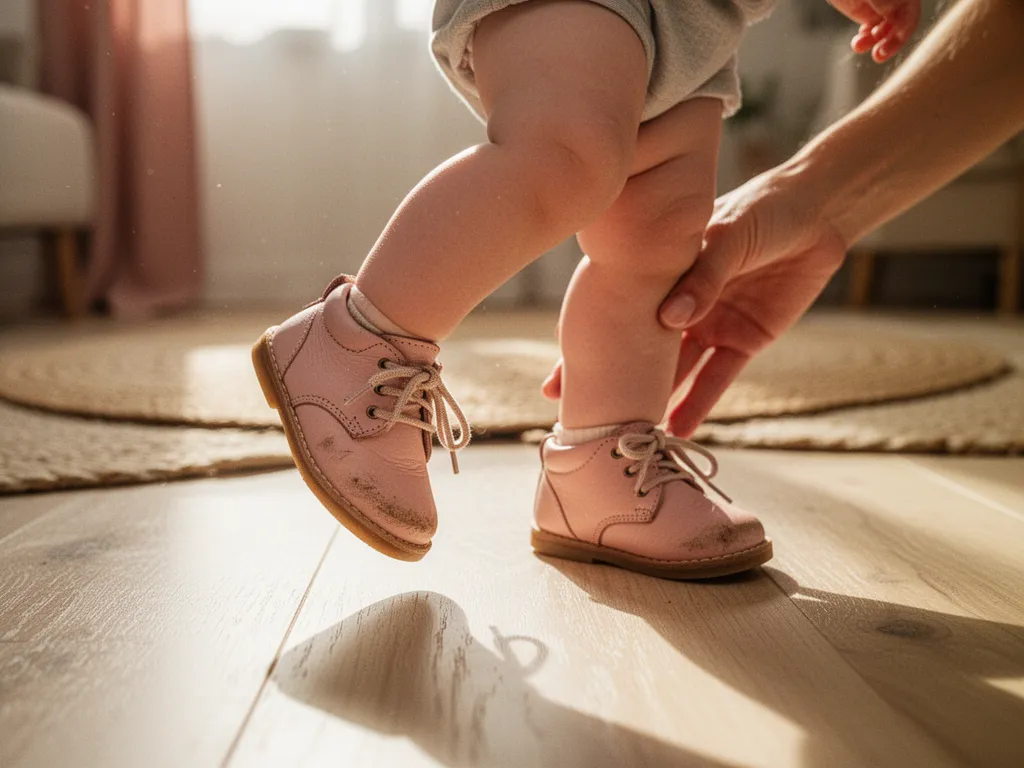
Supportive & Flexible: The Ultimate Guide to Shoes for New Walkers
Ditch the bulky boots and learn the science of toddler foot development. This guide covers when to transition from barefoot to shoes, the non-negotiable features of a healthy first walker, and how to measure for a perfect, growth-ready fit every time.
First Steps, First Shoes: A Gentle Guide to Picking the Right Footwear for New Walkers
Nothing says “my baby is officially a big kid” like watching those first wobbly steps. One minute you’re cheering a crawl across the living-room rug; the next, your toddler is making a break for the hallway. With that new mobility comes a new parenting task: choosing shoes that protect without interfering with natural development.
Below you’ll find practical, evidence-aware guidance on when to buy, what to look for, and how to keep little feet healthy while they explore.
1. Wait for the Skill, Not the Calendar
Age matters less than readiness. Most children begin independent walking between 9 and 15 months, but the exact month is less important than the milestone itself. Once your child can:
- stand flat-footed without support for several seconds, and
- take 8–10 confident steps in a row,
it’s time to consider shoes for outdoor surfaces. Indoors, barefoot or non-slip socks still win.
2. Why Barefoot Is Best (When Safe)
Inside, little feet learn fastest when they can feel the floor. Sensory feedback strengthens the intrinsic muscles of the arch and teaches the brain where the body is in space—skills that bulky shoes can blunt. Save footwear for:
- rough, hot, cold, or wet ground
- public places where splinters, glass, or debris hide
- long walks that exceed what soft socks can handle
3. Anatomy of a Healthy First Shoe
Look for these non-negotiables:
A. Flexible Sole
Grab the shoe at heel and toe. It should bend easily at the ball, not in the middle. A rigid mid-sole forces toddlers to alter their natural gait.
B. Flat, Non-skid Bottom
A thin layer of textured rubber prevents slips without adding height. Avoid wedge styles or thick platforms; they shift the center of gravity and increase falls.
C. Wide Toe Box
Toes need room to splay for balance. If you can pinch a bit of material along the sides when the shoe is on, the width is right.
D. Lightweight Materials
Each extra ounce matters when you weigh 25 lb. Canvas, soft mesh, or thin leather keeps the overall load low.
E. Secure Closures
Elastic cuffs, single Velcro straps, or double Velcro all work—laces are fine if you retie often. The heel should not slip out when the child stands on tiptoe.
F. Breathability
Mesh panels or natural leather wick moisture and reduce odor.
4. Sizing Without Tears
Feet grow in spurts—sometimes a half-size in a month—so measure every 6–8 weeks during the first two years.
Quick home check:
- Have your child stand in the shoe.
- Press the toe area; you want 8–12 mm (about a thumb-width) of space beyond the longest toe.
- Watch the heel: no redness or excessive gaping.
- Let them cruise the hallway; grimacing or high-stepping can signal a poor fit.
Shop in the late afternoon when feet are slightly swollen, and always try both feet—most toddlers have one foot larger than the other.
5. Shoe Types Decoded
Pre-walkers / Crawlers
Ultra-soft moccasins or sock-shoes with dotted silicone grips. Use these only for warmth or cleanliness, not for arch support.First-walkers
Low-top sneakers or Mary-Janes labeled “flexible sole.” Avoid elevated heels or heavy boots.Water-ready
Quick-dry mesh booties for splash-pad days. Drainage holes and thin EVA soles protect from hot concrete while staying feather-light.Cold-weather
Insulated, high-top styles with flexible rubber bottoms. Fleece linings should be removable so you can wash away winter salt.
6. Rotation & Care
Keep two pairs in active use. Alternating allows each pair to dry completely, reducing bacterial buildup and extending life. Machine-wash fabric shoes on gentle; air-dry to prevent sole separation. Check monthly for worn treads, torn seams, or compressed sides—any of these mean it’s time to size up or replace.
7. Red Flags: When to Seek Help
Consult a pediatric podiatrist if you notice:
- persistent toe-walking after 18 months
- one foot turning markedly in or out during steps
- frequent tripping that doesn’t improve with practice
- redness, bumps, or ingrown nails at shoe edges
- uneven shoe wear (one side bald, the other pristine)
Early intervention can correct most gait issues before preschool years.
8. Sustainability & Budget Tips
- Buy second-hand for short-lived sizes, but inspect soles for irregular wear.
- Choose neutral colors that pass easily between siblings.
- Keep a “next-size-up” box so you’re not caught off guard during growth spurts.
Key Takeaways
- Timing matters: introduce shoes only after confident indoor walking.
- Prioritize flexibility, flat soles, and wiggle room over fashion.
- Re-measure often; toddler feet grow faster than you think.
- Barefoot play still builds the strongest foundation.
- Watch for fit problems and replace shoes at the first sign of wear or discomfort.
With the right pair, your new walker can explore the world while you enjoy the view—one tiny, steady step at a time.