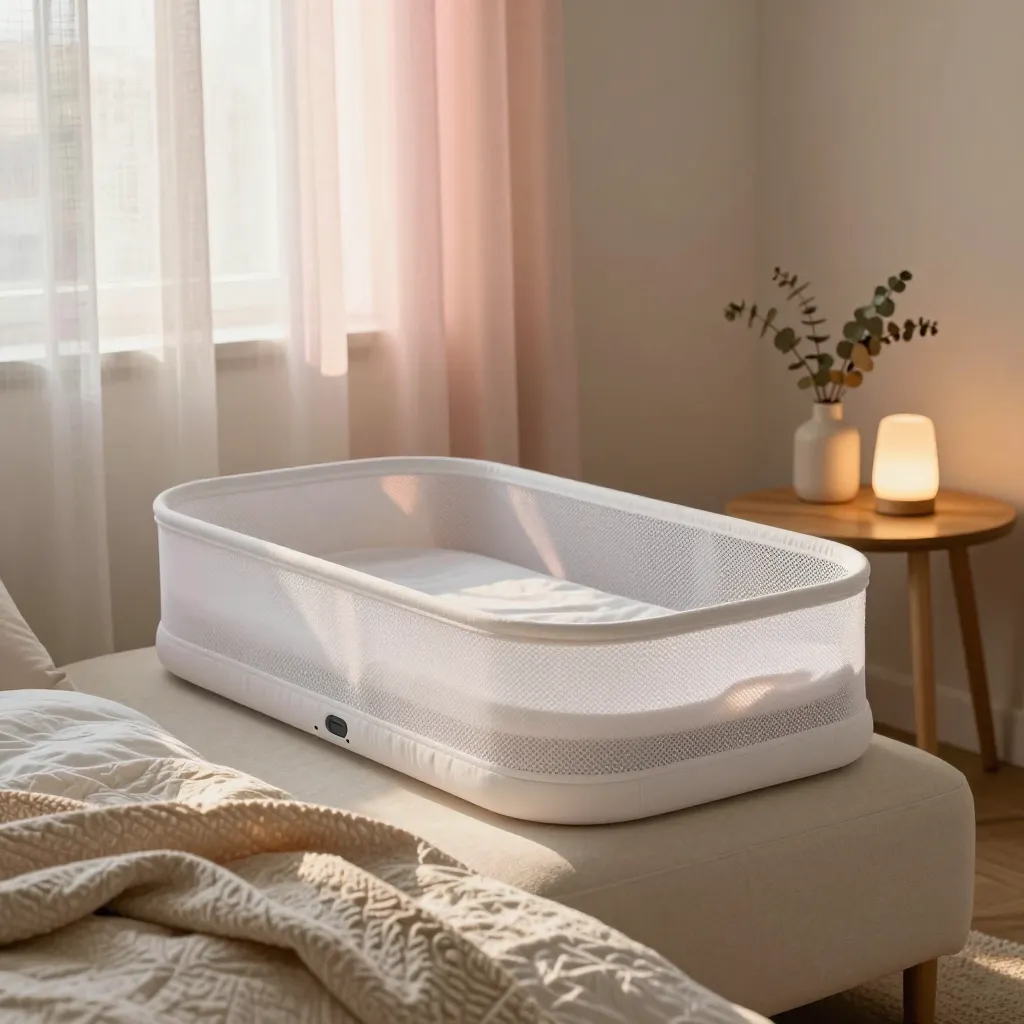
What to Look For When Shopping for Bedside Sleepers: A Safety Guide
Learn how to choose a bedside sleeper that balances infant safety with parental convenience. This guide covers CPSC standards, adjustability for postpartum recovery, and practical tips for room-sharing, making it essential for expectant parents preparing their nursery for those first six months.
Choosing the Right Bedside Sleeper for Your Newborn
Bringing a baby home marks one of life's most transformative transitions. Between assembling the nursery, stocking up on essentials, and mentally preparing for sleepless nights, expectant parents face countless decisions. Among the most important is where your newborn will sleep during those early months.
While some families opt for traditional bassinets or full-size cribs, bedside sleepers have gained popularity for families practicing room-sharing. These specialized sleepers attach securely to the parent's bed, keeping your infant within arm's reach while maintaining separate sleeping surfaces—a configuration that supports breastfeeding and nighttime soothing without the risks associated with bed-sharing.
Prioritizing Safety Standards
Any sleep product for infants must meet rigorous safety requirements. In the United States, bedside sleepers fall under specific federal regulations established in 2014. These standards address critical factors including structural stability, mattress firmness, and the elimination of hazardous gaps between the sleeper and adult mattress.
When evaluating options, verify that the product complies with current CPSC (Consumer Product Safety Commission) guidelines. Avoid purchasing secondhand sleepers, as older models may not meet updated safety protocols, and register your purchase with the manufacturer to receive timely recall notifications.
Key safety features to examine include breathable mesh sides (to reduce suffocation risk), a firm, flat sleep surface, and secure attachment mechanisms that prevent shifting or tilting.
Adjustability and Practical Considerations
Not all bedside sleepers offer the same flexibility. Height adjustment capabilities prove particularly valuable for several reasons:
- Post-surgical recovery: After cesarean sections, minimizing bending and twisting supports healing
- Bed compatibility: Mattresses vary significantly in height; adjustable legs accommodate platform beds, box springs, and adjustable bases
- Travel and transitions: Portable models with adjustable heights adapt to different sleeping environments
Consider your specific circumstances. If you anticipate difficulty with mobility during recovery, prioritize models with smooth, one-handed height adjustments that don't require you to lift or strain.
Understanding the Trade-offs
Like any parenting product, bedside sleepers present both advantages and limitations worth weighing:
Benefits include easier nighttime nursing, reduced disruption when soothing your baby, and the security of hearing and seeing your newborn without leaving your bed.
Potential drawbacks merit honest consideration. The sleeper occupies significant space along your bedside, potentially complicating bed entry and exit for the parent positioned next to it. This inconvenience intensifies during postpartum recovery when movement feels challenging. Additionally, bedside sleepers typically accommodate babies only until they reach rolling or pushing milestones—usually four to six months—meaning you'll transition to another sleep arrangement relatively quickly.
Making Your Selection
Before purchasing, measure your bedroom space and bed height. Read reviews from parents with similar bed configurations. If possible, test assembly and adjustment mechanisms—complicated setups add stress when you're already sleep-deprived.
Remember that safe sleep guidelines from the American Academy of Pediatrics recommend room-sharing (not bed-sharing) for at least the first six months, making a bedside sleeper one of several valid options including standalone bassinets and portable cribs. Choose the solution that aligns with your physical needs, bedroom layout, and feeding plans while maintaining unwavering commitment to safety standards.
Your newborn's sleep environment significantly impacts those fragile early weeks. By selecting equipment that balances proximity, safety, and practicality, you create conditions that support both infant wellbeing and parental recovery during this demanding, precious season.