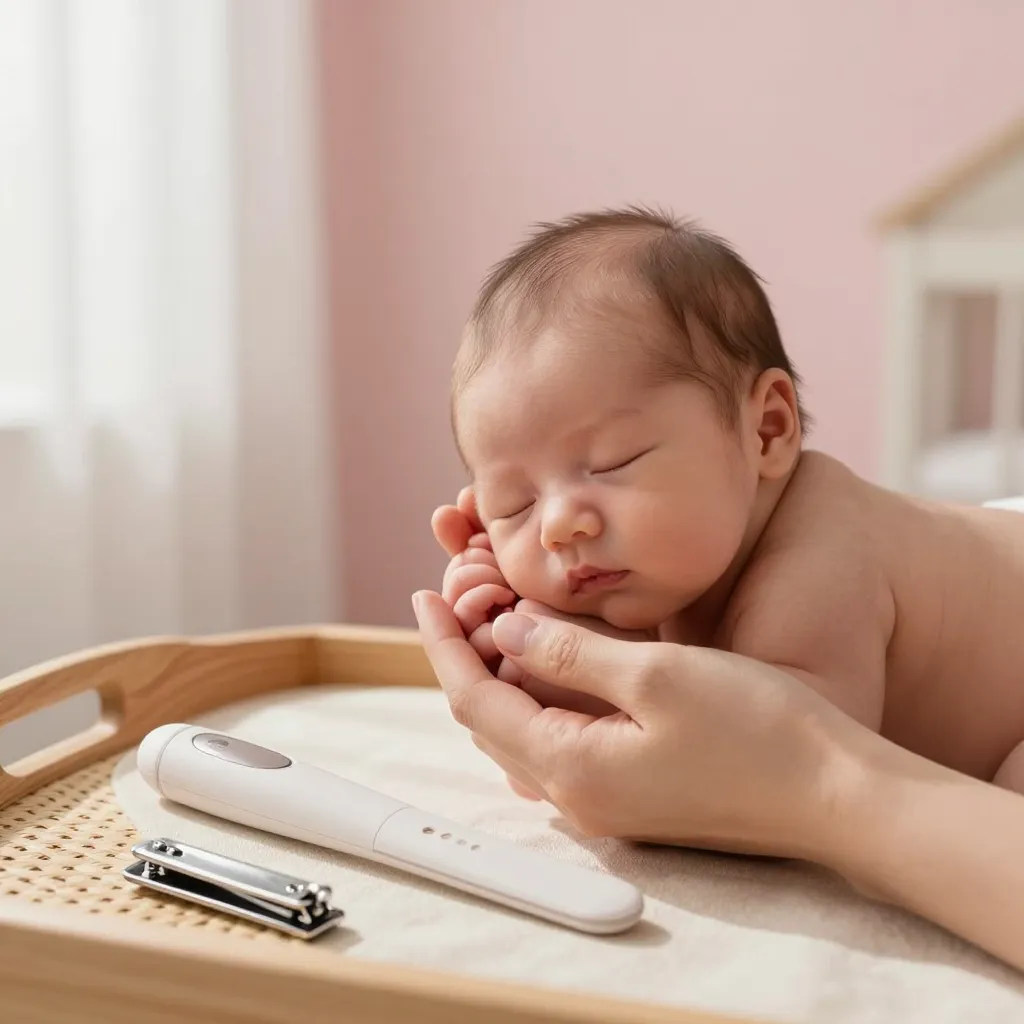
Safe Baby Nail Care: Why Electric Files Are a Game-Changer for New Parents
Electric nail files are revolutionizing newborn grooming by replacing scary clippers with gentle, controlled abrasion. This guide covers essential safety features, practical usage tips, and why these devices help parents maintain their baby's nails confidently from birth through toddlerhood—without the anxiety of accidental cuts.
The Complete Guide to Safe Baby Nail Care: Why Electric Files Are Changing the Game for New Parents
Caring for a newborn involves countless tiny tasks that suddenly feel monumental—none more nerve-wracking than trimming those paper-thin, razor-sharp fingernails. If you've ever held a traditional clipper over your baby's delicate fingers and felt your heart race, you're far from alone. Many new parents delay nail care simply because the fear of accidentally nicking their baby's skin feels overwhelming.
Fortunately, modern baby grooming tools have evolved significantly. Electric nail files designed specifically for infants are emerging as a gentler, more forgiving alternative to conventional clippers. Here's what you need to know about keeping your baby's nails safe, comfortable, and perfectly trimmed.
Understanding Why Baby Nail Care Matters
Newborn nails grow surprisingly fast—sometimes requiring attention twice a week. Those soft, flexible edges might look harmless, but they're surprisingly effective at scratching. Babies lack fine motor control, meaning their flailing hands often leave marks on their own faces, especially during sleep or feeding sessions.
Unlike adult nails, infant nails are thin and adhere closely to the skin, making them difficult to trim without catching surrounding tissue. Traditional clippers, even those marketed for babies, require steady hands and perfect timing—two things that are in short supply during the early weeks of parenthood.
How Electric Nail Files Work
Electric baby nail files operate on a completely different principle than cutting tools. Rather than slicing through the nail, these devices use gentle abrasion to gradually file down the edge. A soft grinding pad rotates at controlled speeds, allowing you to smooth the nail surface without creating sharp corners or risking cuts.
Most quality models feature multiple speed settings, letting you start slowly while learning the technique and adjust as your baby grows. The grinding motion is continuous and controlled, eliminating the "clipping moment" that startles many babies and triggers sudden movements.
Key Safety Features to Look For
When evaluating electric nail files for your baby, prioritize these protective elements:
Pressure-sensitive stopping mechanisms automatically pause the motor if you press too firmly against the nail. This prevents over-filing and protects sensitive nail beds.
Ultra-quiet operation matters more than you might expect. Devices operating under 40 decibels—quieter than a whispered conversation—won't startle sleeping babies or create negative associations with grooming time.
LED illumination helps you see exactly what you're doing, particularly during nighttime touch-ups when natural light isn't available. Look for soft, diffused lighting that won't shine directly into your baby's eyes.
Age-appropriate grinding pads accommodate changing nail composition. Newborn nails are much softer than those of a six-month-old, requiring different abrasive strengths. Quality kits include color-coded or labeled pads for different developmental stages.
Practical Usage Tips for Success
Timing is everything. The ideal moment for nail care is when your baby is calm, well-fed, and either drowsy or asleep. Many parents find success filing during the first few minutes of a nap, when sleep is deepest. Others prefer the post-bath window, when nails are slightly softer from warm water exposure.
Positioning matters. Support your baby's hand firmly but gently, stabilizing the wrist with one hand while operating the file with the other. Some parents find it easiest to lay their baby on a changing table, while others prefer the security of holding them in a nursing position.
Less is more. Unlike clippers that remove nail length in single cuts, electric files work gradually. File a little, check the edge with your fingertip, and continue until the nail no longer catches on fabric. You're aiming for smoothness, not significant length reduction in one session.
Create positive associations. Even with quiet devices, some babies initially resist the sensation. Singing, gentle talking, or offering a feeding immediately after can help establish nail care as a neutral or pleasant experience.
When to Start and How Often
You can begin using an electric nail file from birth, provided you select the appropriate pad and lowest speed setting. Newborns typically need attention every three to five days, while older babies may require weekly maintenance. Toenails grow more slowly and usually need care every two to three weeks.
Always inspect nails before filing. If you notice redness, swelling, or signs of infection around the nail bed, skip grooming and consult your pediatrician. Similarly, if nails appear particularly brittle or discolored, mention this at your next well-baby visit.
Building Your Baby Grooming Routine
Electric nail files work best as part of a comprehensive approach to infant hygiene. Consider establishing a weekly "spa time" that includes nail care, gentle hair brushing, and skin moisturizing. This creates predictability for your baby and ensures no grooming tasks get forgotten during busy weeks.
Keep your file charged and stored with its accessories in a designated location—lost grinding pads always seem to disappear when you need them most. Clean the device according to manufacturer instructions, typically wiping the handle with a damp cloth and replacing grinding pads that show visible wear.
Beyond the Newborn Stage
One significant advantage of investing in a quality electric nail file is longevity. Many models include attachments suitable for adult use, meaning the same device that safely managed your newborn's paper-thin nails can eventually handle your toddler's thicker, stronger growth—and even your own manicure needs.
As your child grows, involve them in the process. Toddlers often enjoy the gentle buzzing sensation and can learn to hold their own fingers steady. This early exposure establishes nail care as routine self-maintenance rather than something to fear or resist.
Final Thoughts
The transition to parenthood involves constant learning and adaptation. Tasks that initially seem intimidating—like safely trimming those impossibly tiny nails—become manageable with the right tools and techniques. Electric nail files represent a meaningful innovation in infant care, removing much of the anxiety that surrounds traditional clipping methods.
Whether you're building your baby registry or searching for solutions to make daily care less stressful, prioritizing safe, gentle grooming tools supports both your baby's physical comfort and your own confidence as a caregiver. The goal isn't perfection—it's finding sustainable, low-stress approaches that keep your little one safe while preserving your peace of mind.