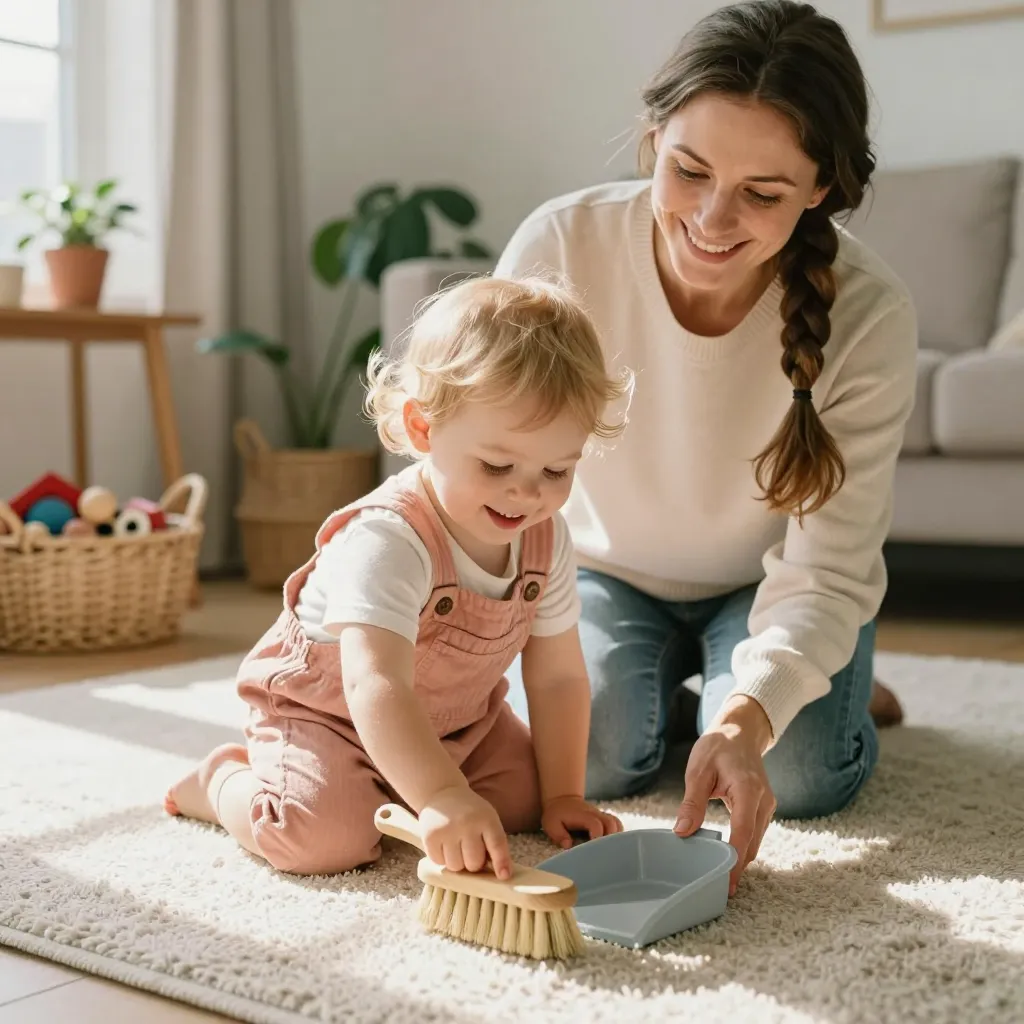
Raising Little Helpers: A Guide to Age-Appropriate Chores for Toddlers
Learn how to channel your toddler's natural desire to help into meaningful life skills. This guide covers age-appropriate chores for 2 and 3-year-olds, offering practical strategies to build confidence, motor skills, and a sense of family contribution from the very start.
Teaching Responsibility to Toddlers: A Gentle Guide for Growing Little Helpers
Every parent dreams of raising a child who grows into a dependable, trustworthy adult. While we often think of responsibility as something older kids need to learn, the seeds of accountability and self-reliance can—and should—be planted much earlier than most people realize. The toddler years, typically ages 2 and 3, offer a surprisingly rich window for introducing these foundational life skills.
What Does Responsibility Look Like for a Toddler?
For a young child, responsibility isn't about perfection or independence. It's about learning to be dependable in small ways, keeping simple promises, and understanding that their actions have consequences. A responsible toddler is one who begins to recognize that certain tasks belong to them, who tries to follow through when asked to help, and who is starting to grasp the connection between their choices and outcomes.
This doesn't happen overnight. Two-year-olds are still mastering basic motor skills and emotional regulation. Three-year-olds are just beginning to understand that the world doesn't revolve entirely around them. But these limitations don't mean they're too young to start. In fact, toddlers have a natural, often overlooked desire to contribute and be helpful—something parents can gently nurture.
Why Start So Early?
Research in child development consistently shows that toddlers have an innate drive to help others, often appearing well before their second birthday. This isn't motivated by rewards or praise alone; young children genuinely want to participate in household life and imitate the caring adults around them.
When parents channel this impulse constructively, several positive outcomes emerge:
- Practical skill-building: Folding washcloths, carrying plastic dishes, or matching socks builds fine and gross motor coordination
- Cognitive growth: Sorting toys by color or type strengthens early problem-solving and categorization skills
- Emotional development: Completing a task, however small, gives toddlers a sense of competence and pride
- Family connection: Contributing to household routines helps children feel like valued members of the family unit rather than passive recipients of care
Perhaps most importantly, early experiences with responsibility lay neural and behavioral groundwork that becomes harder to establish later. A child who learns at age 2 that their help matters is more likely to embrace bigger responsibilities at 5, 8, and beyond.
How to Teach Responsibility Through Everyday Moments
Model the Behavior You Want to See
Toddlers are relentless observers. They notice whether you put your shoes away, how you speak about household tasks, and whether you follow through on your own commitments. If cleaning up feels like a burden you complain about, they'll absorb that attitude. If you approach daily routines with calm consistency, they'll begin to mirror that energy.
This doesn't mean pretending chores are always fun. It means demonstrating that certain tasks are simply part of living in a shared space, and that completing them brings a quiet sense of satisfaction.
Offer Genuine Opportunities to Help
Responsibility and independence grow together. Look for moments where your toddler can do something meaningful without your hands-on assistance:
- Pulling up their own pants after a diaper change or using the potty
- Carrying a small item from the car into the house
- Pouring water from a small pitcher into a cup
- Placing a book back on a low shelf
These actions may take longer when a toddler does them. They may be messier. But the message you're sending—that you trust them to try—is worth the extra time.
Establish Clear, Simple Expectations
Toddlers need boundaries to understand what responsible behavior looks like. Keep your rules age-appropriate and focused on safety and respect: gentle hands with pets and friends, staying near a grown-up in parking lots, using a calm voice indoors.
When boundaries are crossed, follow through with consistent, proportionate consequences. If a toy is thrown in anger, the toy is put away for a short period. This isn't punishment for punishment's sake—it's helping your child connect their choices with outcomes, which is the heart of accountability.
Introduce Age-Appropriate Chores
Chores for toddlers shouldn't be about productivity. They're about participation, learning, and building identity as someone who contributes.
For 2-year-olds, consider:
- Dropping toys into a designated bin (start with just a few items)
- Carrying unbreakable dishes to the sink
- Placing fruit or vegetables in refrigerator drawers
- Putting shoes by the door
- Dropping dirty clothes into a hamper
For 3-year-olds, add tasks like:
- Dusting accessible surfaces with a cloth
- Wiping up small spills with a towel
- Hanging a jacket on a low hook
- Matching socks from clean laundry
- Fetching simple items for a baby sibling (diapers, burp cloths)
- Helping unpack groceries
- Dressing themselves with minimal assistance
- Scooping dry pet food with supervision
The key is breaking each task into manageable steps and demonstrating exactly what you expect. A 3-year-old won't intuitively know how to fold a washcloth unless you show them, slowly and repeatedly.
Strategies for Making Chores Work
Build Routines, Not Requests
Toddlers thrive on predictability. When cleanup happens every evening before dinner, or when dirty clothes always go in the hamper after bath time, the behavior becomes automatic rather than negotiable. Frame these moments as simply "what we do" rather than special favors you're asking for.
Keep It Playful
A lighthearted approach keeps resistance at bay. Sing a cleanup song, race against a timer, or turn sock-matching into a guessing game. This isn't bribery—it's acknowledging that toddlers learn best through joy and engagement. The work gets done, but the emotional association remains positive.
Demonstrate and Simplify
Never assume your toddler knows how to complete a task you've assigned. Show them slowly. Break "clean your room" into "put the stuffed animals on the bed, then the blocks in the box." Use visual cues: a picture of a truck on the bin where toy vehicles belong, or color-coded baskets for different types of toys.
Manage Your Expectations
A toddler who "helps" fold laundry will create more wrinkles than they remove. A 2-year-old who carries a dish to the sink might drop it. The goal isn't a perfectly executed task—it's the attempt, the learning, and the growing sense of capability. Praise effort and specific actions ("You put all the red blocks away!") rather than generic compliments.
Make It Collective
When possible, clean up or complete routines together as a family. Toddlers are more willing participants when they don't feel singled out, and working alongside you reinforces that household care is a shared value, not a burden placed on children alone.
Using Visual Tools for Motivation
Simple chore charts can be remarkably effective for young children. At ages 2 and 3, skip written lists in favor of picture-based charts showing each task—an image of a toy and bin for cleanup, a shirt and drawer for putting clothes away.
Place the chart where your toddler can see and reach it. Let them place a sticker or make a mark when a task is finished. For some children, the visual tracking itself is rewarding enough. Others may appreciate a small celebration at week's end: a special one-on-one activity, a dance party in the living room, or choosing a favorite story to read together.
Keep rewards experiential rather than material when possible. The goal is internal motivation—helping because it feels good to contribute—not a transactional mindset where every task demands compensation.
Embracing the Long View
Teaching responsibility to toddlers is an exercise in patience. There will be days when your child refuses to participate, when tasks take three times longer than doing them yourself, when it seems like nothing is sticking. This is normal toddler behavior, not a sign that your efforts are failing.
Consistency over time matters more than perfection in any single moment. A child who learns at 2 that they can carry their own plate, who practices at 3 until they can dress themselves, who sees their parents modeling dependability day after day, is building an identity. They're becoming someone who shows up, who tries, who understands that their actions ripple outward into the lives of others.
That identity doesn't fully form in the toddler years. But it begins there, in the quiet moments of putting blocks away and hanging up jackets, in the patient guidance of caregivers who believe their little one is capable of more than the world often expects.
Your toddler wants to help. Say yes as often as you can. The helping hands may be small now, but with time, nurturing, and trust, they'll grow into something strong and steady.