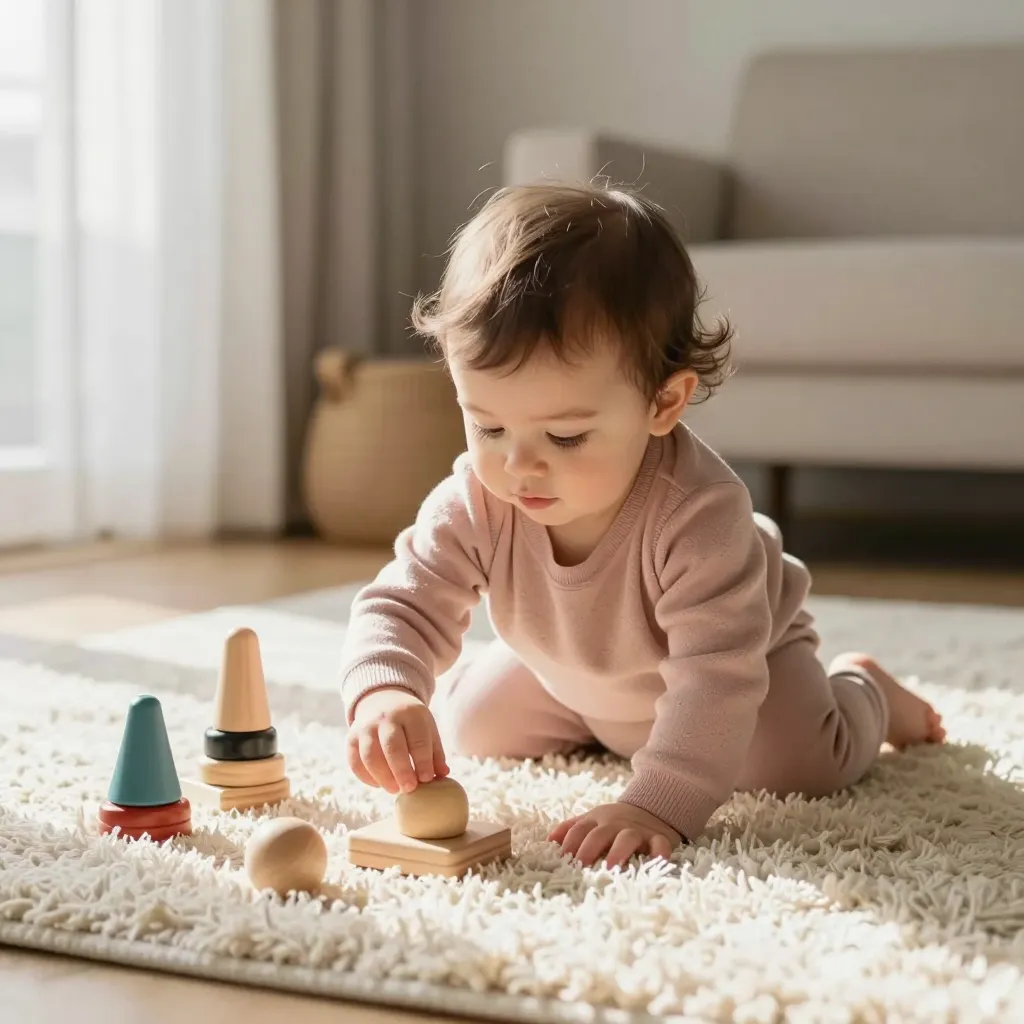
Mastering Toddler Milestones: A Guide to Physical and Cognitive Growth
This comprehensive guide explores the essential domains of toddler development from ages one to three. Learn to identify key milestones in language, motor skills, and social-emotional growth while discovering practical, play-based strategies to help your child reach their full potential.
Navigating Toddler & Child Development: What Parents Need to Know
Introduction
Every child grows and learns at their own pace, and the toddler years (roughly 12 months to 3 years) are a particularly vibrant period of rapid change. Understanding the main developmental domains—physical, cognitive, language, and social‑emotional—can help you feel more confident as you watch your little one explore the world. This guide offers a clear, practical overview of typical milestones, simple ways to support each area, and gentle guidance on when to seek extra help.
1. Physical Development: Moving, Grasping, and Growing
Gross‑Motor Milestones (large‑muscle movements)
| Age | Typical Skills |
|---|---|
| 12 months | Pulling to stand, cruising along furniture, may take first independent steps |
| 18 months | Walking well, starting to run, climbing onto low steps |
| 2 years | Running, kicking a ball, jumping with both feet |
| 3 years | Climbing stairs alternating feet, pedaling a tricycle, catching a large ball |
Fine‑Motor Milestones (hand‑eye coordination)
| Age | Typical Skills |
|---|---|
| 12 months | Pincer grasp (thumb‑index finger) for small objects, scribbles with a crayon |
| 18 months | Building a tower of 2–4 blocks, turning pages one at a time |
| 2 years | Using a spoon, copying simple line drawings, stringing large beads |
| 3 years | Drawing a circle, cutting with child‑safe scissors, dressing with assistance |
How to Encourage Physical Growth
- Provide safe open space for crawling, cruising, and running.
- Offer age‑appropriate toys that require grasping, pushing, pulling, or climbing (e.g., soft balls, low climbing structures, push‑pull toys).
- Join in active play—toss a ball back and forth, dance to music, or take short walks together.
- Limit prolonged time in high chairs, strollers, or screens; regular movement breaks help develop coordination and strength.
2. Cognitive Development: Thinking, Problem‑Solving, and Memory
Typical Cognitive Milestones
| Age | What You Might Observe |
|---|---|
| 12 months | Explores cause‑and‑effect (e.g., shaking a rattle makes noise); shows interest in hidden objects |
| 18 months | Recognizes familiar people and objects; begins to imitate adult actions (e.g., “talking” on a toy phone) |
| 2 years | Sorts shapes and colors; follows simple two‑step instructions (“Pick up the ball and put it in the box”) |
| 3 years | Engages in pretend play; solves simple puzzles; recalls parts of a story heard earlier |
Supporting Cognitive Growth
- Offer open‑ended toys such as shape sorters, stacking cups, and simple puzzles that require trial‑and‑error.
- Encourage exploration by letting your child discover how things work (e.g., what happens when you push a toy car down a ramp).
- Narrate everyday activities (“Now we’re pouring water into the cup”). This builds language while reinforcing logical sequences.
- Read together daily—point to pictures, ask “What does the dog say?” and let your child turn pages.
3. Language & Communication: From Babbles to Sentences
Typical Language Milestones
| Age | Receptive (understanding) | Expressive (speaking) |
|---|---|---|
| 12 months | Responds to own name, follows simple commands (“give me the ball”) | Says 1–3 words (e.g., “mama,” “dada”) |
| 18 months | Points to body parts when asked; understands “no” | Uses 10–25 words; begins two‑word phrases |
| 2 years | Follows two‑step directions; enjoys simple stories | Vocabulary of 50+ words; starts combining nouns and verbs (“more milk”) |
| 3 years | Understands concepts like “big/small,” “in/on” | Speaks in sentences of 3–4 words; asks many “why” questions |
Boosting Language Skills
- Talk constantly—describe what you’re doing, what you see, and how you feel.
- Read picture books together, naming objects and describing actions.
- Repeat new words in context and give your child chances to use them.
- Limit screen time; interactive conversation is far more powerful for language development than passive viewing.
4. Social‑Emotional Development: Feelings, Relationships, and Self‑Regulation
Typical Social‑Emotional Milestones
| Age | Key Social‑Emotional Skills |
|---|---|
| 12 months | Shows stranger anxiety; enjoys simple interactive games like “peek‑a‑boo” |
| 18 months | Displays a range of emotions (joy, frustration, fear); may show affection to familiar adults |
| 2 years | Engages in parallel play (plays beside other children); begins to show defiance (“I do it myself”) |
| 3 years | Shows empathy (comfort a crying peer); participates in cooperative play; expresses a wider range of emotions |
Fostering Social‑Emotional Growth
- Validate emotions (“I see you’re upset because the block fell”). Naming feelings helps children learn to manage them.
- Model appropriate coping—take deep breaths, use calm voices when you’re frustrated.
- Provide opportunities for peer interaction—playdates, group classes, or playground time allow practice sharing, taking turns, and negotiating.
- Encourage independence while setting clear, gentle limits (“You can choose which shirt to wear, but we need to leave now”).
5. Play as a Learning Engine
Play is the natural “classroom” for toddlers and preschoolers. It weaves together physical, cognitive, language, and social‑emotional development.
- Pretend play (e.g., feeding a stuffed animal) builds imagination and language.
- Constructive play (e.g., building towers) hones fine‑motor skills and problem‑solving.
- Active play (e.g., chasing a ball) strengthens gross‑motor coordination and self‑regulation.
- Social games (e.g., “Ring Around the Rosie”) teach turn‑taking and cooperation.
Aim for a balance of child‑led (free play) and guided (parent‑initiated) activities each day.
6. Recognizing Potential Developmental Delays
While every child follows a unique timeline, certain signs may warrant a conversation with your pediatrician:
| Domain | Red‑Flag Signs (by age) |
|---|---|
| Physical | Not walking by 18 months; persistent toe walking after age 2; marked stiffness or extreme clumsiness |
| Cognitive | Lack of curiosity or exploration after 12 months; inability to follow simple instructions by 2 years |
| Language | No words by 15 months; fewer than 50 words at 2 years; loss of previously acquired words |
| Social‑Emotional | No eye contact, lack of response to name, or withdrawal from people beyond typical stranger anxiety; extreme, frequent tantrums interfering with daily life after age 3 |
If you notice any of these signs, you are your child’s best advocate. Schedule a developmental screening with your pediatrician; early identification opens the door to helpful resources and interventions.
7. Communicating with Your Pediatrician
- Prepare a brief history of milestones (e.g., when your child first walked, first said words, favorite games).
- Write down specific observations that concern you, noting the context and frequency.
- Ask open‑ended questions (“What activities can I do at home to support his language development?”).
- Request referrals if you feel a specialist (speech therapist, occupational therapist, developmental pediatrician) would be helpful.
Remember: a collaborative relationship with your healthcare provider empowers you to make informed choices.
8. Building a Supportive Home Environment
- Safe, child‑proof spaces encourage exploration without constant “no.”
- Consistent routines (e.g., regular meal, nap, and play times) provide a sense of security that supports emotional regulation.
- Positive language (“Let’s try this”) rather than punitive commands fosters curiosity.
- Modeling behavior (reading, sharing, problem‑solving) shows children how to act in everyday situations.
9. Wrapping Up
Toddler and early childhood development is a rich tapestry woven from physical growth, emerging thoughts, expanding words, and blossoming feelings. By offering loving guidance, age‑appropriate challenges, and plenty of play, you give your child the foundation to thrive. Trust your instincts, celebrate each small win, and remember that reaching out for support—whenever you feel uncertain—is a sign of strength, not weakness.
Your child’s journey is uniquely their own, and your steady presence makes all the difference. Enjoy the adventure!