Treating Your Child's Fever: FAQs Every Parent Needs to Know
Fever in children can be scary, but it's usually the immune system doing its job. This guide answers parents' most common questions — from when to worry and what temperature is too high, to which medicines are safe and how to keep your child comfortable at home.
Managing Your Child's Fever: A Parent's Complete Guide
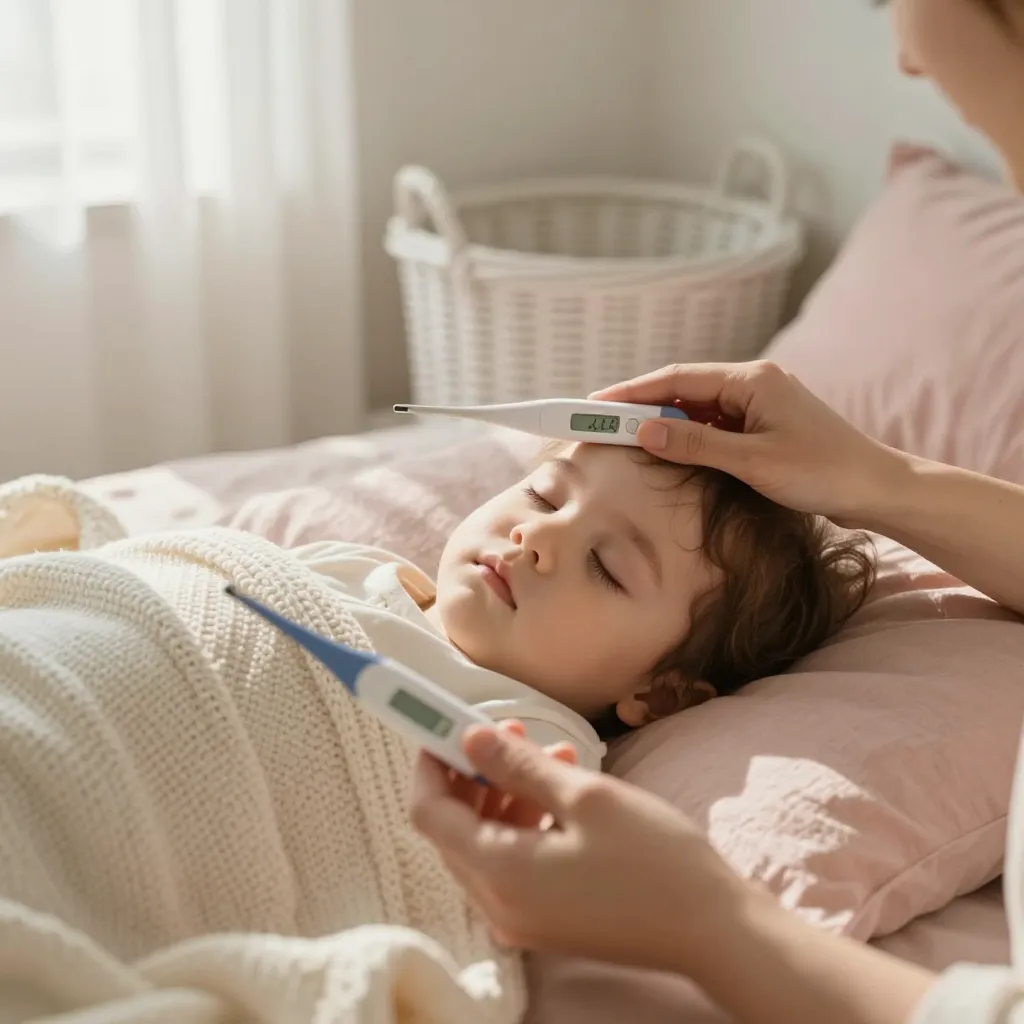
Feeling your child's warm forehead and watching that thermometer climb is one of those moments that instantly puts every parent on high alert. But here's something reassuring to hold onto: a fever, while uncomfortable, is almost always a sign that your child's immune system is doing exactly what it's supposed to do. Understanding what a fever means — and what it doesn't — can help you respond calmly and confidently.
What Exactly Is a Fever?
A fever is not an illness in itself. It's a symptom — the body's deliberate response to infection or illness. When germs enter the body, the immune system raises the internal temperature to create a less hospitable environment for bacteria and viruses. In that sense, a fever is actually working in your child's favor.
A temperature of 100.4°F (38°C) or higher is generally considered a fever in children. Anything below that threshold is considered a normal variation, even if it feels slightly warm.
Normal body temperature can fluctuate throughout the day — typically lower in the morning and higher in the late afternoon or evening — so the time of day matters when you take a reading.
What Causes a Fever in Children?
The most common causes of fever in children include:
- Viral infections — such as colds, flu, RSV, or roseola. These are by far the most frequent culprits.
- Bacterial infections — such as ear infections, urinary tract infections, strep throat, or pneumonia.
- Post-vaccination reactions — a mild fever following immunizations is normal and typically short-lived.
- Overheating — spending too long in a hot car or overdressing an infant can raise body temperature, though this differs from a true infection-related fever.
Can Allergies Cause a Fever?
Allergies — including hay fever, food allergies, and seasonal reactions — do not cause a true fever. If your child has a runny nose and sneezing alongside a fever, an infection is a more likely explanation than allergies alone. If you're unsure, check in with your pediatrician.
Does Teething Cause a Fever?
This is one of the most common questions parents ask, and the honest answer is: not really. Teething can cause a very slight rise in temperature due to gum inflammation, but research consistently shows it does not cause a true fever of 100.4°F or higher. If your teething baby has a genuine fever, look for another cause.
How to Take Your Child's Temperature Accurately
The method you use matters — and it depends on your child's age.
| Age | Recommended Method |
|---|---|
| Under 3 months | Rectal thermometer (most accurate) |
| 3 months – 3 years | Rectal or temporal artery (forehead) thermometer |
| 4 years and older | Oral or temporal artery thermometer |
Rectal temperature remains the gold standard for infants and young toddlers. While it may feel uncomfortable for parents to do, it gives the most reliable reading.
Temporal artery (forehead) thermometers are convenient and reasonably accurate, especially for older toddlers and children. Make sure to follow the manufacturer's instructions and avoid taking a reading right after bath time or outdoor exposure.
Ear (tympanic) thermometers can be less accurate in very young children because tiny ear canals make it hard to get a clean reading.
Avoid relying on forehead strips or touch alone — these are not reliable for clinical decision-making.
When Is a Fever Too High?
There isn't a single magic number that means "go to the ER immediately," but there are clear guidelines to help you decide when to seek care.
Call your pediatrician promptly if:
- Your child is under 3 months old and has any fever at or above 100.4°F — this is always an urgent call, no exceptions
- Your child is 3–6 months old with a fever above 102°F
- Fever has lasted more than 5 days at any age
- Your child has a high fever above 104°F that doesn't come down with medication
- Fever is accompanied by a stiff neck, persistent vomiting, severe headache, trouble breathing, or a rash that looks like small red or purple dots
Seek emergency care immediately if your child:
- Is under 3 months with any fever
- Has a seizure (febrile seizure)
- Is unusually difficult to wake, limp, or unresponsive
- Has difficulty breathing or is turning bluish
High fever doesn't always mean serious illness
A 104°F fever in a 3-year-old who is drinking, playing, and interactive is generally less concerning than a 101°F fever in a newborn or in a child who is extremely lethargic. Your child's behavior and appearance matter as much as the number.
How to Bring Down a Fever: Fever-Reducing Medicines
Fever-reducing medications — called antipyretics — are safe and effective when used correctly. The two main options are:
Acetaminophen (e.g., Tylenol)
- Safe for children 2 months and older
- Dosed by weight, not age — always check the label or ask your pediatrician
- Can be given every 4–6 hours as needed
- Available in infant drops, children's liquid, chewable tablets, and more
Ibuprofen (e.g., Advil, Motrin)
- Safe for children 6 months and older
- Also dosed by weight
- Can be given every 6–8 hours as needed
- Has the added benefit of being an anti-inflammatory, which can help with pain from ear infections or other inflammation
Which is better: acetaminophen or ibuprofen?
Both are effective. Neither is universally "better" — it often comes down to your child's age (ibuprofen isn't approved under 6 months), how frequently you need to dose, and any underlying health conditions. Talk to your pediatrician if you're unsure which is appropriate for your child.
Never give aspirin to children or teenagers — it's linked to a rare but serious condition called Reye's syndrome.
Can I alternate between acetaminophen and ibuprofen?
Some pediatricians do recommend alternating the two medicines to manage high or persistent fevers, since they work differently and have different dosing intervals. However, alternating can increase the risk of dosing errors. If you want to try this approach, ask your child's doctor first and use a written schedule to keep track of what was given and when.
Is Fever-Reducing Medicine Always Necessary?
Not necessarily. The goal of giving fever medicine is primarily to make your child more comfortable, not to bring the temperature to a specific number. If your child has a low-grade fever but seems happy, is drinking fluids, and is playing normally, it's perfectly fine to hold off on medication and monitor.
Keep in mind:
- Fever-reducing medicine will not make an illness go away faster — it only treats the symptom
- A mild fever can actually be helpful to the immune response
- Do treat fever if it's clearly causing discomfort, preventing sleep, or discouraging your child from eating and drinking
Natural Ways to Help Reduce Fever
While home remedies won't replace medical treatment when it's needed, several supportive measures can help your child feel more comfortable:
Keep them hydrated. Fever increases fluid loss. Offer water, breastmilk, formula, or diluted juice frequently. Popsicles and broth work well for toddlers who don't want to drink.
Dress lightly. Avoid bundling a feverish child in heavy blankets. Light clothing and a single sheet help the body release heat more efficiently.
Lukewarm sponge bath. A gentle lukewarm (not cold) sponge bath can help bring the temperature down slightly and provide some comfort. Avoid ice water or alcohol rubs — these can cause shivering, which actually raises body temperature, and alcohol can be absorbed through the skin.
Keep the room comfortable. A cool, well-ventilated room helps. You don't need to blast the air conditioning, but a stuffy, overheated room can make things worse.
Encourage rest. Your child's body is working hard. Rest supports recovery.
When to Worry Less
Most childhood fevers are caused by common viral illnesses that resolve on their own within 3–5 days. Your child is generally doing okay if they:
- Are responding to you and making eye contact
- Are able to drink fluids
- Have wet diapers (for infants) or are urinating regularly
- Show some improvement in mood or energy when the fever comes down with medicine
A fever alone, without other worrying symptoms, in a child over 3 months of age who appears relatively well is usually a watch-and-wait situation — not an emergency.
A Quick-Reference Summary
| Situation | What to Do |
|---|---|
| Fever in infant under 3 months | Call pediatrician immediately |
| Fever above 104°F | Call pediatrician |
| Fever lasting more than 5 days | Call pediatrician |
| Fever with stiff neck, rash, or trouble breathing | Seek emergency care |
| Low fever, child seems fine | Monitor, keep hydrated, comfort measures |
| Moderate fever, child is uncomfortable | Acetaminophen or ibuprofen (age/weight appropriate dose) |
Parenting a sick child is exhausting and worrying, even when you know intellectually that fevers are usually harmless. Trust your instincts — if something feels off beyond the fever itself, reach out to your pediatrician. You know your child best, and a quick call is always worth it when you're unsure.