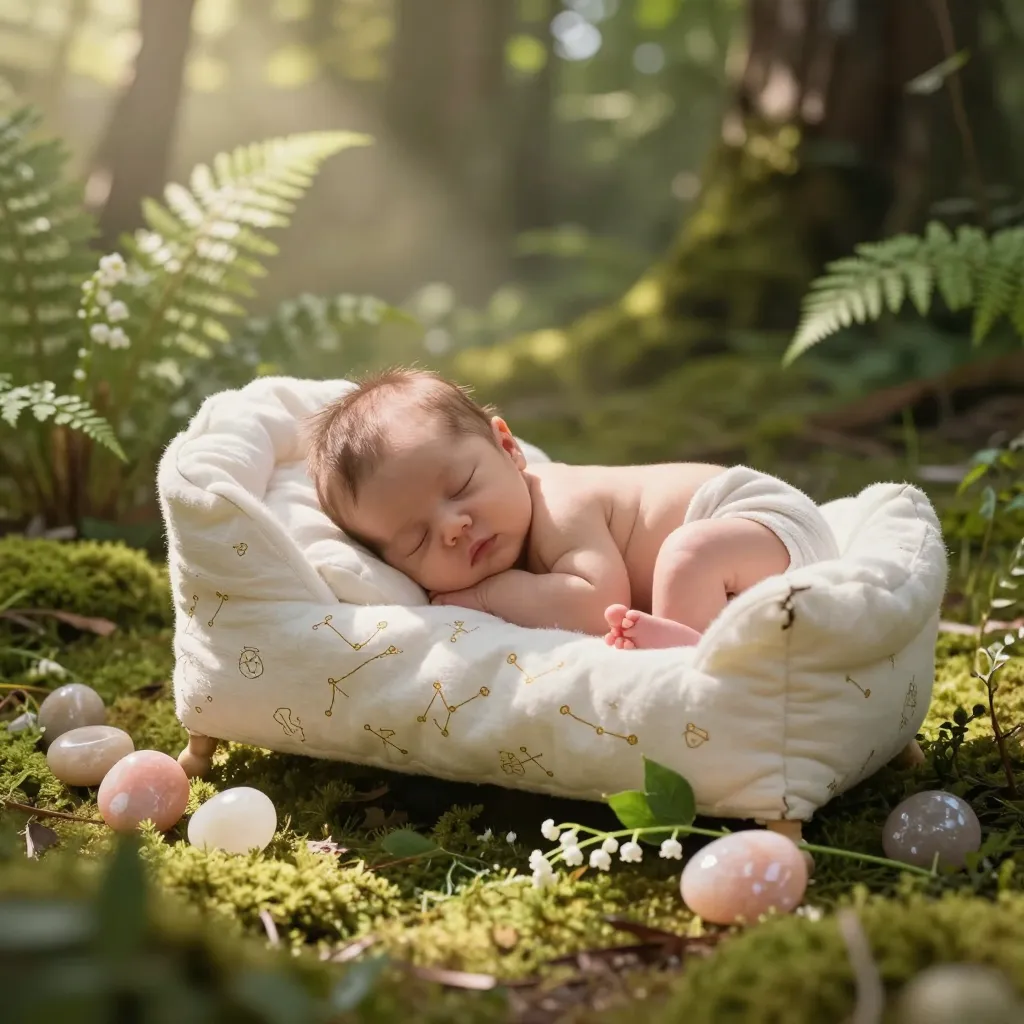
What Are My Baby's Birth Symbols? A Guide to Zodiac, Stones, Flowers, and Trees
Birth symbols, including zodiac signs, birthstones, flowers, and trees, are tied to each birth month from ancient traditions. They provide parents with a framework to celebrate their baby's unique identity and create meaningful rituals. Incorporate these symbols into your family life to add cultural depth and personal significance.
Birth symbolsoffer a charming way to connect with your baby’s arrival, rooted in ancient traditions that link celestial, botanical, and geological elements to personality traits and meanings. These symbols—zodiac signs, birthstones, flowers, and trees—provide meaningful ways to celebrate your child’s unique identity and create lasting traditions. Understanding their origins and applications can enrich your parenting journey with cultural depth and personal significance.
The concept of birth symbols draws from diverse historical practices. Babylonian astrology aligned character traits with constellations, while Celtic tree astrology assigned trees to specific periods, reflecting personality characteristics. Roman traditions introduced the practice of associating specific flowers with birthdays, and Biblical references suggest gemstones have long symbolized protection and spiritual qualities. Each symbol carries layered meanings, from love and strength to hope and guidance, offering parents a framework to reflect on their child’s potential journey.
For each birth month, distinct symbols create a personalized tapestry of meaning. January babies resonate with garnet (symbolizing trust), the carnation and snowdrop (representing love and hope), and the fir, elm, or cypress trees. February’s amethyst (for clarity) pairs with violets and primrose (loyalty and devotion), while March’s aquamarine (calm) and daffodils (forgiveness) align with willow, lime, and oak trees. April’s diamond (invincibility) complements daisies and sweet peas (innocence), and May’s emerald (rebirth) harmonizes with lilies of the valley and hawthorn (purity). June’s pearl (purity) pairs with roses and honeysuckle (bonds of love), while July’s ruby (protection) and larkspur (bonds) connect to apple, fir, and elm trees. August’s peridot (healing) and gladiolus (remembrance) align with poplar and cedar, and September’s sapphire (protection) and aster (love) pair with weeping willow and olive trees. October’s tourmaline (friendship) and marigold (enduring love) connect to rowan and walnut, while November’s topaz (love) and chrysanthemum (innocence) align with walnut and chestnut trees. December’s tanzanite (protection) and paperwhite (rebirth) pair with hornbeam and beech trees.
Parents can creatively incorporate these symbols into meaningful rituals. Planting a tree or flower symbolic of your child’s birth month creates a living legacy, while crafting a memory box adorned with faux gemstones or dried specimens offers a tangible keepsake. Wearing birthstone jewelry or creating family tree art that maps ancestral connections adds layers of personal history. Annual traditions, like photographing your child beside their birth tree or flower, capture growth alongside nature’s cycles. These practices foster emotional bonds and celebrate the unique story each birth symbol tells.